 by
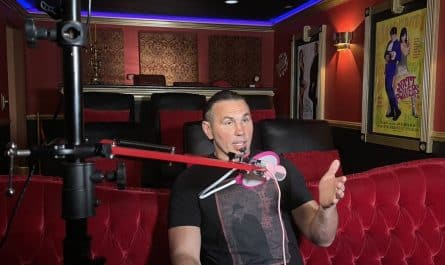
by Eddie Kingston’s return to AEW has been one of wrestling’s most anticipated comebacks. In a candid conversation with Shak Wrestling ahead of All Out, the Mad King from Yonkers revealed the physical and mental struggles of his recovery, what kept him going during his darkest moments, and why he’ll never truly be satisfied until the very end.

The Reality of Recovery
Kingston doesn’t sugarcoat his rehabilitation journey. “My insurance sucked,” he states bluntly, explaining how he had to wait months before starting proper physical therapy. “I had to wait for the new year to get new insurance and then finally was able to go to PT.”
During those waiting months, Kingston tried doing his own physical therapy with squats and deadlifts, not really knowing what he was doing. When he finally got professional help, the therapists had to push him hard from day one. His leg wouldn’t straighten properly, staying bent when it should have been straight.
The doctor who performed his surgery set realistic expectations, telling Kingston he wouldn’t feel 100% until maybe a year of being back in the ring. Kingston’s response? “I haven’t felt good being like 100% maybe since my six months in the business, after my first bad fall. I’m pretty much used to fighting banged up.”
The Mental Game
While the physical pain was manageable for someone with eight or nine surgeries under his belt, Kingston admits the mental aspect was the real battle. “The hardest part of anything in life is the mental game of all this. So, the physical’s whatever. The pain is whatever.”
He describes two particularly difficult months when he was alone, his partner having to leave to handle family matters. “Days in the dark by myself,” he recalls. Unable to turn to his old coping mechanism of drinking, Kingston turned to stress eating, which created its own health problems. “My body’s like, ‘Bro, we’re not a kid no more. You can’t stress eat or binge eat like I used to binge drink.'”
During this time, Kingston found himself trying to convince himself it was okay to retire. “I was trying to convince myself that it’s okay to call it. Like, to end it.” He would lie to himself about being satisfied with what he’d accomplished, listing his achievements like competing in the G1 Climax.
What He Missed Most
Despite telling everyone he wasn’t watching, Kingston admits he watched everything. “I lied to everybody. ‘Hey, are you watching?’ ‘Nah.’ But I watched everything, dog.” Seeing AEW continue without him was heartbreaking. Missing Texas, missing Wembley again, and especially missing Forbidden Door hurt deeply.
Kingston describes being in the ring as an out-of-body experience that brings him peace. “There’s no bills, there’s no girlfriend, ex-girlfriend, ex-wife, wife, boyfriend, husband, dogs, cats, nothing’s in your mind but that fight and that moment. And it’s peaceful for me. It’s peaceful in there and calming, even though I’m getting beat up or beating somebody up.”
The Voices That Kept Him Going
Two people played crucial roles in keeping Kingston from retirement: Rocky Romero and his mentor Homicide. Homicide’s words particularly resonated. “Eddie, I was forced to retire. You can walk, you can run now, you can cut, you can do stuff. Why leave? Are you really satisfied?”
Homicide reminded Kingston that he didn’t get to go out on his own terms and urged Eddie not to make the same mistake. “I know this is not the way you want to go out,” Homicide told him. Kingston agrees: “I want to go out on my shield. I want to go out swinging to the end so no one can ever say anything that they can say whatever they want about Eddie Kingston but one thing they can’t say was that I was not defiant to the end.”
The Fans Who Cared
Kingston also found strength in fan messages, though he admits to reading them without letting people know he’s seen them. “I would read these messages from these fans. I read ’em all. Good and bad. Because I’m a firm believer if you’re gonna like the good, you gotta like the bad.”
The support genuinely puzzled him at times. “I would sit there and just be like, ‘Why do these people even care?’ I’m just the kid from Yonkers, New York, man.”
Never Satisfied
When asked what it would take for him to be satisfied with his career, Kingston’s answer is stark: “Nothing. Death.”
He explains that there’s always another goal, another arena with history calling to him. Budokan, Arena Mexico, Madison Square Garden. He speaks passionately about feeling the spirits of past wrestlers in buildings like Korakuen Hall and Sumo Hall. Missing AEW’s return to Hammerstein Ballroom particularly stung. “Hammerstein’s my place. That’s my home.”
Moving Forward
Now Kingston is back to basics, going to a local ring by himself to shadowbox with weights, roll around, and run the ropes. “I’m basically fighting the invisible man,” he says, working on footwork and timing. “I just gotta act like I’m three years in the business again and train twice a week.”
For Eddie Kingston, success was achieved the moment he could make a living from wrestling, no matter how rough. “AEW’s just icing on the cake,” he reflects. But satisfaction? That’s something else entirely. As long as he can stand, as long as he can fight, Eddie Kingston will keep pushing forward, defiant to the end.
His return at All Out against Big Bill isn’t just another match. It’s the continuation of a journey that almost ended in a dark room with self-doubt and stress eating. It’s proof that sometimes the hardest fights happen outside the ring, and the greatest victories come from simply refusing to stay down.