 by
by If you took a world-class professional wrestler and dropped them onto a desert island, could they still wrestle?
They could execute the moves. They could run the ropes if they built them. They could deliver a perfect suplex to a palm tree and cut a fiery promo to the crashing waves. But would it be wrestling?
The answer is no. Because unlike a painter who can create a masterpiece in a locked room, or a musician who can play a symphony for an empty hall, wrestling is an art form that does not exist in a vacuum. It is a circuit that requires a completion point.
If a wrestler goes to a desert island, they’d better bring a fan with them. Without the witness, without the reaction, the art form dissolves into mere athletics.
The Audience as the Guitar
There is a misconception that the wrestler is the musician and the match is the song. But the true dynamic is far more symbiotic. In the theater of the squared circle, the audience is not just listening to the music. The audience is the instrument.
Think of the crowd as a guitar. The wrestler’s job is not just to perform in front of it but to play it. Every bump, every taunt, every agonizing second in a submission hold is a finger pressing on a fret, strumming a chord.
A musician can practice scales alone in their bedroom and it is still music. But a wrestler cannot practice “the pop” alone. They cannot practice the heat alone. The magic of pro wrestling only exists in the mind of the viewer. The wrestler provides the suggestion, the physical movement, but the impact happens in the collective psyche of the crowd.
When a babyface rallies for a comeback, they are tuning the instrument. If they rush it, the note goes sharp. If they wait too long, the note goes flat. The greatest workers in history aren’t the ones who know the most holds. They are the ones who know exactly how to strum the heartstrings of 15,000 people simultaneously to create a sound that becomes a memory.
Authenticity: The Death of Acting
We often get bogged down in the debate of “real” versus “fake,” but the secret to great wrestling lies in a different dichotomy: feeling versus acting.
You cannot simply act the role of a wrestler. The camera is too close. The audience is too savvy. If a performer is having a bad day, or if they are distracted by real-life issues, the crowd smells it instantly. They sense the disconnect.
The most electric performers, the ones who transcend the mid-card and become legends, are those who stop interpreting a character and start being. They don’t recite lines. They speak their truth, magnified. The best technique a wrestler has isn’t their dropkick or their powerbomb. It’s their personality. Personality is the ultimate cover for any technical flaw.
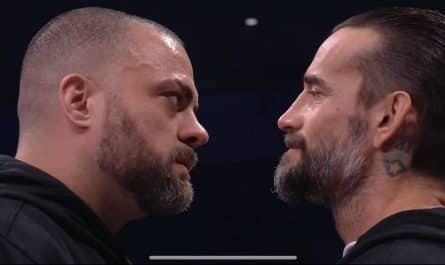
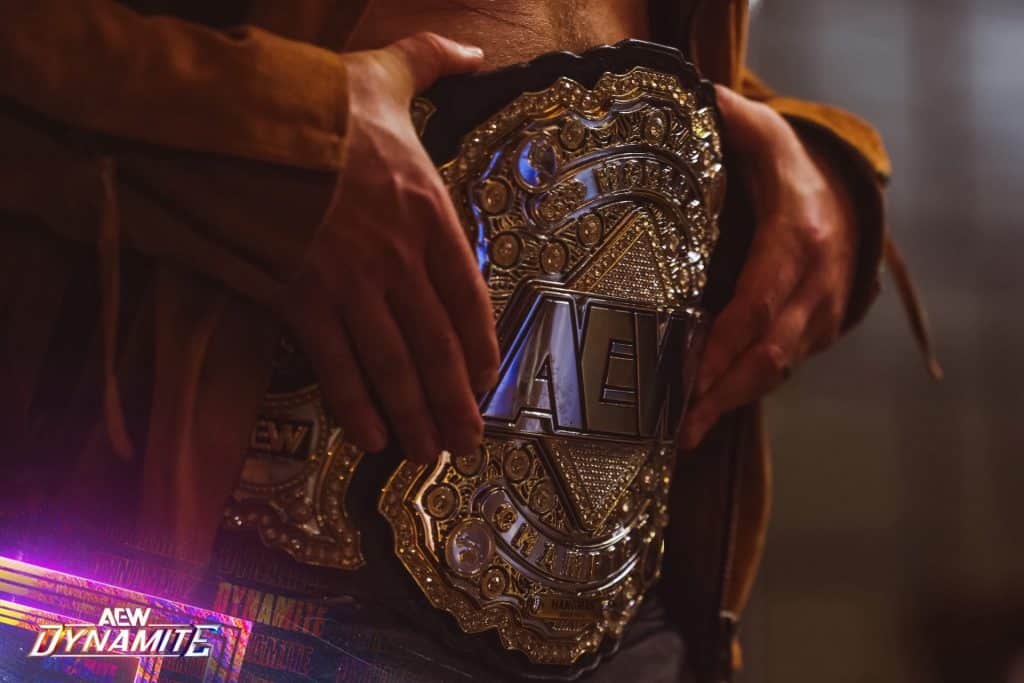
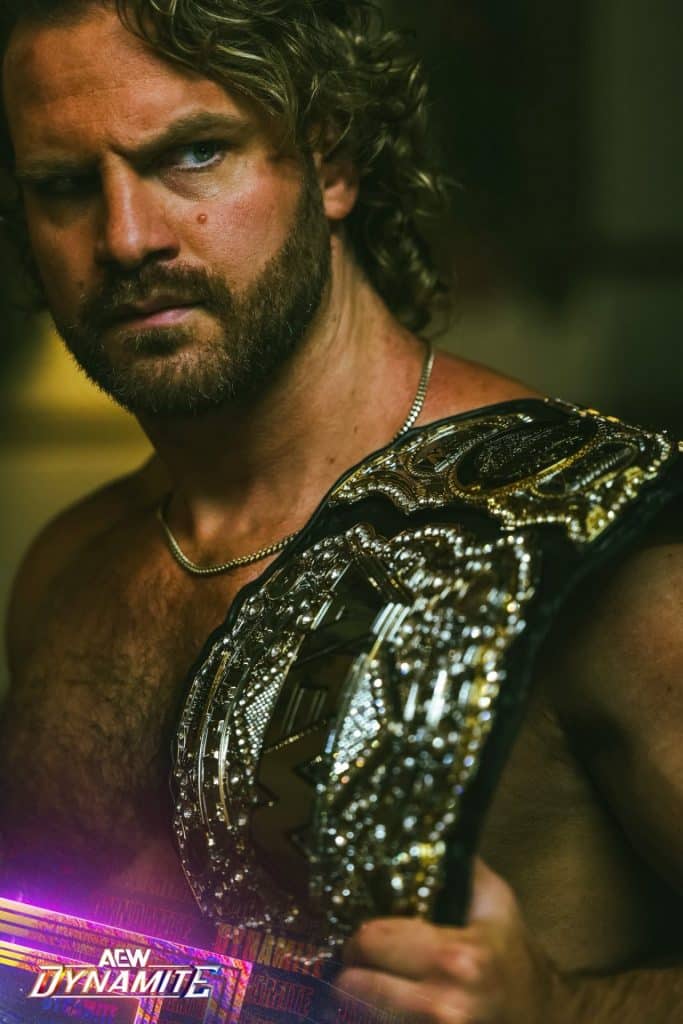
Think about Hangman standing across from MJF in February, both men under threat of fines if they threw a punch. MJF ran down his resume. He listed accomplishments. He talked about being better. And Hangman, when asked to name one thing he does better than Max, simply said: “I am real.” That’s the whole secret in three words. MJF can talk circles around anyone. But when he spat in Hangman’s face, it wasn’t because he won the argument. It was because he lost it.
If the audience falls in love with the person, they stop looking for the wires. They stop caring if a punch missed by an inch. They are too busy feeling the joy, the anger, or the heartbreak of the human being in the ring. The technical perfection becomes secondary to the emotional connection.
The Architecture of Chaos
To the uninitiated, a wrestling match can look like chaos. It looks like a fight. But the master knows that this chaos is meticulously structured control.
Consider the pacing of a match. A common mistake for younger talent is to treat a match like a machine gun. Rat-a-tat-tat. Move after move after move. They think success is defined by the difficulty of the maneuver. If they can just hit a 450 splash, the crowd will love them.
But the human brain is selective. If you see a chair float across the room, it’s a miracle. If you see furniture floating for 15 minutes straight, it becomes wallpaper. You stop seeing the miracle because the emotion has plateaued.
Great wrestling requires contrast. It follows a rule of emotional endurance. You cannot keep a crowd standing for 20 minutes. They need to sit so they can stand again. You cannot have 15 minutes of high spots without a rest hold to let the significance sink in.
The trick isn’t the Canadian Destroyer. The trick is the space between the moves. It’s the moment when Hangman and Ospreay both removed their elbow pads in the Owen Hart final. The match stopped. Everyone knew what was coming. Hidden Blade versus Buckshot Lariat. A shootout. The two men charged at each other, and Hangman connected first. That pause before the collision is the most powerful symbol in the wrestler’s arsenal. It demands an answer. It forces the audience to invest.
Making Memories, Not Moves
Why do we love wrestling? Why do we fly across the country for Double or Nothing? Why do we stay up late to watch Wrestle Kingdom?
It isn’t because we want to see a specific sequence of grappling exchanges. It’s because we want to take something home with us that lasts longer than the merch. We are hunting for memories.
Twenty years from now, you won’t remember the wrist-lock exchange in the second minute of the match. You will remember Hangman, tears in his eyes at the post-show press conference, thanking the fans for sticking with him through two years of darkness. You will remember the moment at All In Texas when Swerve Strickland, his bitter rival, helped him finally dethrone Moxley. You will remember the hug you gave your friend when the three-count hit.
The wrestler’s job is to manipulate memory. They use psychology to edit your experience in real time. They make you forget the botch and remember the recovery. They make you forget that it’s a work, and for three seconds, make you believe it’s the most important fight in the history of the world.
If a wrestler leaves the ring and the audience says, “That was a cool move,” they have succeeded athletically. But if the audience leaves the arena saying, “I will never forget how that made me feel,” they have succeeded artistically.
The Lineage of Joy
We are part of a lineage. The wrestlers in the ring today are the children of the titans who came before them. The Harts, the Funks, the Guerreros. They learned the language of the ring before they could even read the dirt sheets. And we, the fans, are part of that family too.
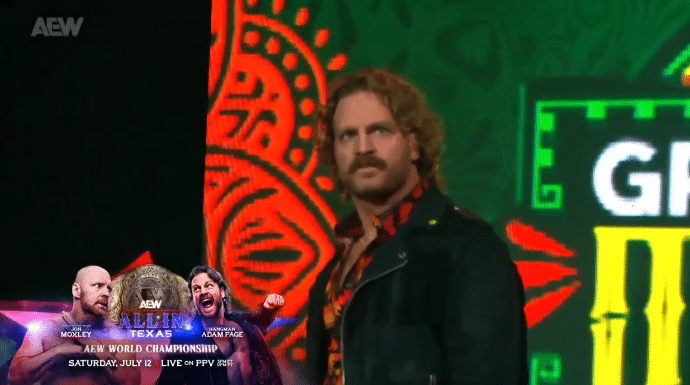
Hangman opened Grand Slam Mexico with a promo entirely in Spanish, apologizing for his accent but trying anyway. He talked about his family’s tobacco farm in Virginia, about the men who came from Nayarit every summer to work. He said their names. He told the crowd in Arena México that those men taught him something important: we are all better when we work together.
That’s the lineage. Not just moves passed down from trainer to student, but the understanding that wrestling is collaboration. Between promotions. Between countries. Between the person in the boots and the person in the seat.
We sit around the metaphorical campfire of the ring, watching the same stories told in new ways. We watch the structure, the chaos, the technique, and the personality all blend into that final, beautiful picture of the main event finish.
Wrestling is a shared dream. It is a collaboration between the person in the boots and the person in the seat. Without us, they are just people in spandex fighting on a desert island.
But with us? With us, they are magic.